
1974 Focus Magazine Cover Story
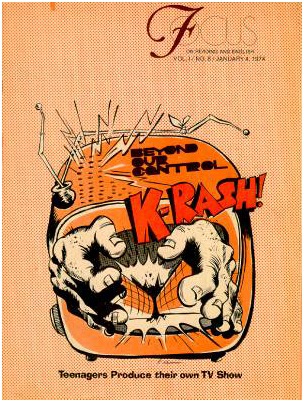
Can Teenagers produce a quality TV show?
"Quiet in the studio, please. This is a take."
"Roll video tape recorder. Bring up audio. Action."
On the studio stage an operation is taking place-a one-in-a-million tonsillectomy. The camera zooms in for a close-up of the doctor's hands as he removes the whole head of the patient and replaces it with a cabbage!
The story is a spoof on TV soap operas. The place is a professional TV studio. And the actors, cameramen, technicians, and director are all high school students.
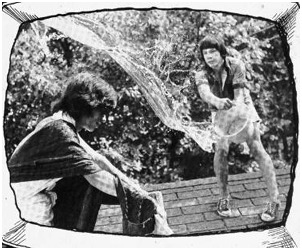
About 30 teenagers gather every Saturday morning in the WNDU studio to produce the weekly shows. They're trying to answer the question: What would you do if you were given a half-hour of TV time to fill?
The question was first posed by WNDU 13 years ago when the station joined Junior Achievement, a national program that offers young adults practical business experience. More than 250 teenagers have participated in the WNDU program, over the years, many of them going on into professional broadcasting.
"The project demands that you I develop a sense of professionalism and responsibility at an unusually early age," said Diane Werts a student who sells advertising for "Beyond Our Control." "It should help us all later."
As part of their training, students, work from October through May on every aspect of producing a professional TV show. Specialized jobs writing, art, photography, video tape operation, audio, and lighting are assigned on the basis of interest and ability. Everyone is called upon to act.
At the beginning of each year the entire group gets together for a brainstorming session and contributes to the Idea Book. Subjects for the book are drawn from TV shows and ads that students want to poke fun at.
Each week one of the ideas is: selected, and treatment for it is decided- location filming or livestudio taping. Among "Beyond Our Control's" productions have been:
*a parody of children's TV shows with five-second cartoons and constant commercials.
* The "Nearly Wed Game," featuring young couples on the eve of their wedding.
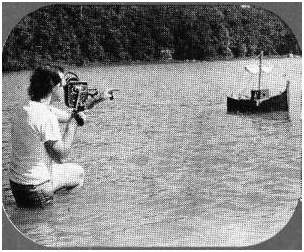
* A parody of Ben Hur filmed with miniature boats on a small pond.
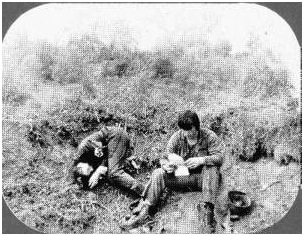
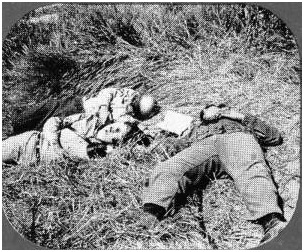
* A takeoff on World War II movies in which the hero gets a Dear John letter that turns out to be an April Fool joke.
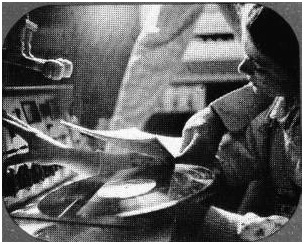
They did get a chance to explain, however. To the local sheriff. He was called out by the residents of the town who phoned to complain that a bunch of Nazi nuts were running around the area.
It turned out that the crew had chosen a predominantly Jewish neighborhood for their filming.
Most of the work done by the group is not quite as exciting as their brush with the law. In fact, preparing the show is a lot of routine hard work.
The first problem each week belongs to the scriptwriters, who hold production meetings each Saturday and Sunday morning and on three weeknights to work out script solutions to production problems.
The writers prepare shooting scripts that include instructions for sound and camera shots. (You'll find sample scripts from actual shows on pp. 10-15.)
Scripts are distributed and parts assigned at a compulsory Thursday night meeting of the whole company. This meeting is also the only rehearsal for the crew before they actually show up at the studio at 8 a.m. Saturday morning to work out the complex problems of putting a show together.
By 1 p.m. everything has to be done- the show has to be on tape. WNDU studios are needed for other productions after that time.
The hectic schedule requires rapid, dedicated work from all members of the company. But the payoff comes for them shortly before 1 p.m. when they gather around the studio monitor to view results. There come some groans and many shouts of glee. And then it's time to start all over again on the work for the next week's production.
Some of the students spend as many as 35 hours a week on the TV production work. Why are high school students willing to put so much time into a TV show?
"I see it as a creative outlet for all those against the usual standards of society, and football and basketball in particular," explains Dave Bashover.
"Even if I don't choose to pursue a broadcasting career, my 'Beyond Our Control' experience is as valuable to me as it is fun," says Randy Rhinehart, this year's treasurer.
Despite the hard work and constant demand for high levels of humor, the "Beyond Our Control" experience seems alluring for those students who experience it. Ninety percent of those eligible return for a second year of work. These talented young people are proving to viewers that teenagers can really keep TV well within their control.
Focus, January 24, 1974, pp.6-8